Blackstone-Millville Picks 7–12 Grade Alignment for BMR
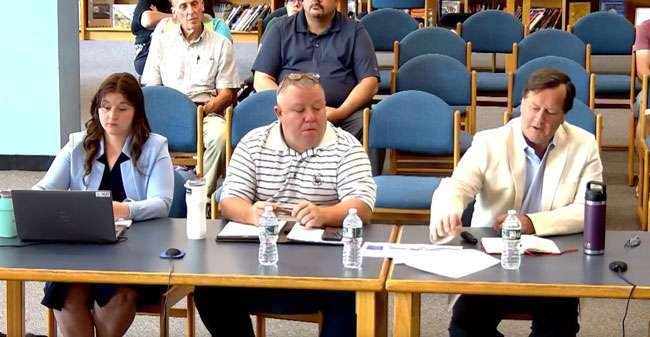
Blackstone-Millville School Building Committee Leans Toward 7–12 Grade Alignment for High School Project
The Blackstone-Millville high school building project took another step forward during a public hearing on June 12, where the School Building Committee and School Committee discussed potential grade alignments, long-term operational impacts, and initials plans.
Though few residents were in attendance, Superintendent Jason DeFalco emphasized this is just one step in a much longer process. “This is not the last time we’ll be having public conversations about this project,” he said. “We’re having a public hearing tonight because we need to give direction to our architect and project manager for a submission due to the MSBA at the end of August.”
That submission—known as the Preferred Schematic Report (PSR)—requires clarity on a key issue: grade alignment. The committees narrowed their options to four potential configurations, but one came out ahead.
Grade Alignment Options Considered
The architectural firm DRA presented the following grade configuration options for the Blackstone-Millville high school building project:
- 6–12: Most expensive option; raises concerns about maturity gaps between the youngest and oldest students in the building.
- 7–12: Slightly less expensive; allows more time in one environment, with earlier access to high school-level academics and activities.
- 8–12: Current configuration; easier to implement, but may not offer the most effective long-term academic and social structure.
- 9–12: Least expensive to build; limits course offerings, extracurriculars, and flexibility in programming for younger grades.
| School Name | Current Configuration Grades | Grades 6-12 High School | Grades 7-12 High School | Grades 8-12 High School | Grades 9-12 High School |
| Millville Elementary | Central Office | Grades Pre-K ~2 | Grades Pre-K ~2 | Grades K-3 | Grades Pre-K ~2 |
| John F. Kennedy Elementary | Grades PreK-1 | Central Office | Central Office | Pre-K & Central Office | Central Office |
| Augustine F. Maloney Elementary | Grades 2-3 | Offline | Offline | Offline | Grades 3-5 |
| Frederick W. Hartnett Middle School | Grades 4-7 | Grades 3-5 | Grades 3-6 | Grades 4-7 | Grades 6-8 |
| Blackstone Millville Regional High School | Grades 8-12 | Grades 6-12 | Grades 7-12 | Grades 8-12 | Grades 9-12 |
What Staff Think About the Blackstone-Millville High School Building Project
To inform the decision, district staff were surveyed. With a high 70% response rate, staff preferred 8–12 and 9–12 configurations, citing the following themes:
- Concerns about maturity differences between younger and older students
- Support for exposing younger students to high school expectations early
- Recommendation that younger students (grades 6–8 or 7–8) be housed in a separate academy-style wing within the high school building
These insights will influence how the school is designed, with a likely emphasis on creating distinct spaces for different age groups.
A Model for Success: West Bridgewater Middle-Senior High
Architects from DRA showcased West Bridgewater Middle-Senior High School as a model that balances shared facilities with student separation. The building uses separate entrances, wings, and administrative offices to ensure middle school students have their own dedicated space while still benefiting from shared amenities like gyms and auditoriums.
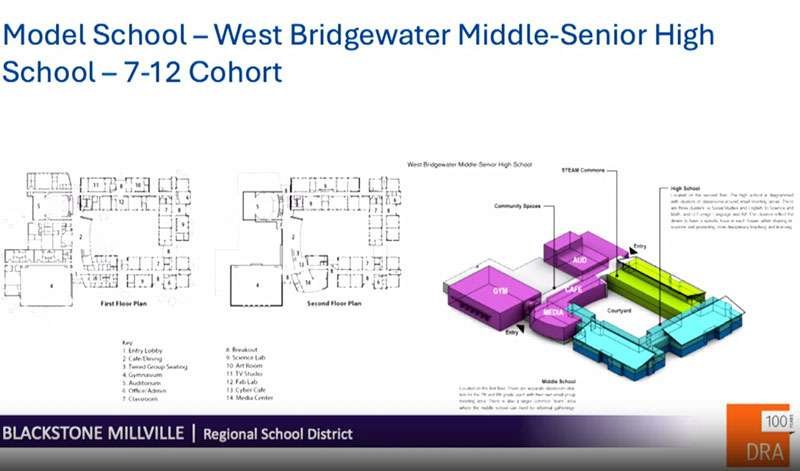
This model could guide how the Blackstone-Millville high school building project is designed, especially if younger grades are included in the new or renovated space.
Talking Dollars: Preliminary Costs and Considerations
Jeff Silverstein, Finance Committee Chair for Blackstone and a member of the School Building Committee, emphasized the importance of transparency. He urged that preliminary cost estimates be shared with the public, noting that understanding the potential financial impact is a key part of informed community participation.
While representatives from DRA (the project architect) were hesitant to lock in any numbers this early in the process, they did share very rough, high-level estimates—with strong caution that these figures are subject to change and based only on square footage assumptions:
- 6–12 configuration: estimated around $170 million
- 9–12 configuration: estimated around $120 million
These are not final numbers, and much of the total cost will depend on specific design choices, enrollment targets, and programming needs. Additionally, while up to 55% of eligible costs may be reimbursed by the state through the MSBA, many variables can affect that figure, including:
- Site limitations
- Demolition and abatement exclusions
- Furniture, fixture, and equipment reimbursement caps
- Enhancements requested by the community beyond MSBA baseline models
Greg Smolley from DRA reminded the group that these figures are only useful for context:
“The discussion on dollars is almost superfluous at this point… Grade alignment drives enrollment, drives programming, and drives design. Once we have that, we can talk real numbers.”
In short, while the cost is one of the biggest concerns for residents, it’s also one of the most complex. Estimates will become clearer after the grade alignment decision informs the full educational and building program.
What About Existing Buildings and Future Use?
At the June 12 hearing, Millville Select Board member Rachel Anderson raised a critical question: “What’s happening with extra areas in the Central Office? What happens with general heating costs, stuff like that, that over time we have those areas empty… are we going to utilize those areas if we’re building more areas?”
Greg Smolley of DRA, who previously served as a town planner, responded:
“You don’t ever go into a plan without answering that question… What you have in Blackstone-Millville is a little bit unique in that the towns own the elementary schools. That would be part of the negotiation that will take place between people in the town and the district.”
He emphasized the need to prevent towns from being saddled with unforeseen operational costs tied to leftover or underused space, such as utilities or building upkeep. According to School Committee Chair Dan Keefe, communication lines are open between Blackstone and Millville leadership, and these discussions are happening and will continue as the project evolves to ensure fair and thoughtful planning around shared spaces.
A separate but related discussion touched on the possibility of bringing AFM (Augustine F. Maloney) back online, which would require the district to return to a four-school model used prior to the recent consolidation. Doing so would mean restoring staff positions that were eliminated during the consolidation process. Superintendent DeFalco noted that 11.5 positions were cut due to the consolidation, including key roles like a principal, nurse, and head custodian—all of which would need to be reinstated if the school were brought back online, leading to increased long-term operational costs.
So while repurposing or reopening existing buildings is not part of the current high school project, it remains a key factor in long-term planning and budgeting across the district.
Grade Alignment Decision: 7–12 Moves Forward
After reviewing community feedback, staff input, and financial and educational considerations, both the School Committee and School Building Committee voted to move forward with the 7–12 grade alignment for the Blackstone-Millville high school building project.
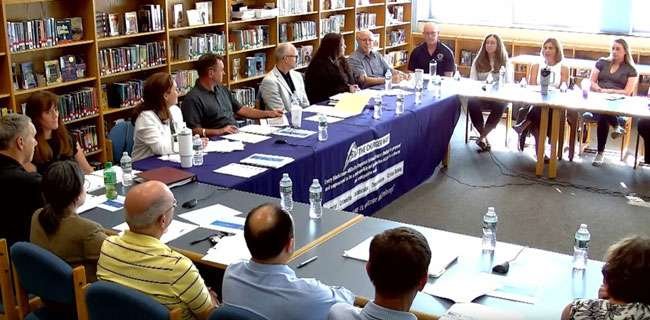
The School Committee approved the recommendation unanimously, while the School Building Committee voted in favor, with one nay and one abstention.
This decision gives architects and project managers the direction needed to move into the next phase of the MSBA submission process.
What’s Next for the Blackstone-Millville High School Building Project?
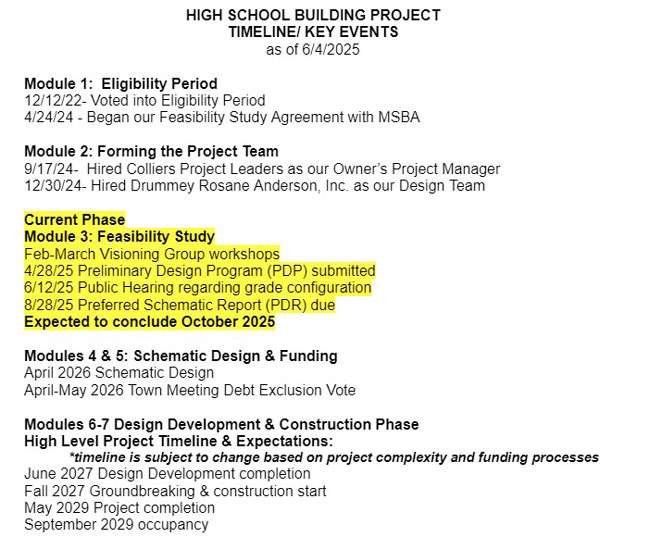
The selection of the 7–12 grade configuration is only the beginning. The next step is for the architects and project manager to complete the PSR and submit it to the Massachusetts School Building Authority (MSBA) by the end of August.
More public forums and hearings will be scheduled before the project goes to a community vote in spring 2026.
How You Can Get Involved
The Blackstone-Millville high school building project will shape the future of education in our towns. Community involvement is critical.
📌 Follow updates on the district website and town website
📌 Attend upcoming meetings and voice your opinion
📌 Talk to School Committee and School Building Committee members
📌 Encourage your neighbors and friends to participate
Superintendent Jason DeFalco reminded residents at the start of the hearing:
“This is not the last time we’ll be having public conversations about this project… We’re doing this now because we need to give direction to our architects, but there will be so much more discussion between now and the community vote next spring.”
This is your chance to help shape the future of the district—get involved early, ask questions, and speak up while there’s time to make a difference.
Key Documents & Resources
- BMRSd School Building Project Hub
- 2020 Facilities Assessment
- DRA Application
- School Building Committee Minutes – May 28, 2025 with Presentation
- An Update from the Blackstone Millville Regional School District Capital Planning Committee
- MSBA Project Pipeline
- School Building Committee Members
- School Committee Members
For more community coverage like this, follow Small Town Post on Facebook and stay informed on projects that shape our schools and neighborhoods.